

Beyond Possessions and Prestige, a Modern Perspective on Exceptional Living, Exclusive Experiences and the Pursuit of Possibility
Luxury has always represented more than the ownership of beautiful objects. Throughout history, it has reflected changing ideas about status, culture, craftsmanship, comfort, and the freedom to live according to one’s own preferences. From grand architectural spaces and bespoke design to private travel and extraordinary experiences, luxury has continually evolved alongside society’s understanding of success.
Today, however, the meaning of luxury is undergoing another transformation. The emphasis is increasingly moving beyond visible wealth toward individuality, privacy, personal freedom, and access to experiences that cannot easily be replicated. In this evolving landscape, the most compelling definition of luxury may not be found in what a person owns, but in the opportunities they can explore, the time they can protect, and the life they choose to create.
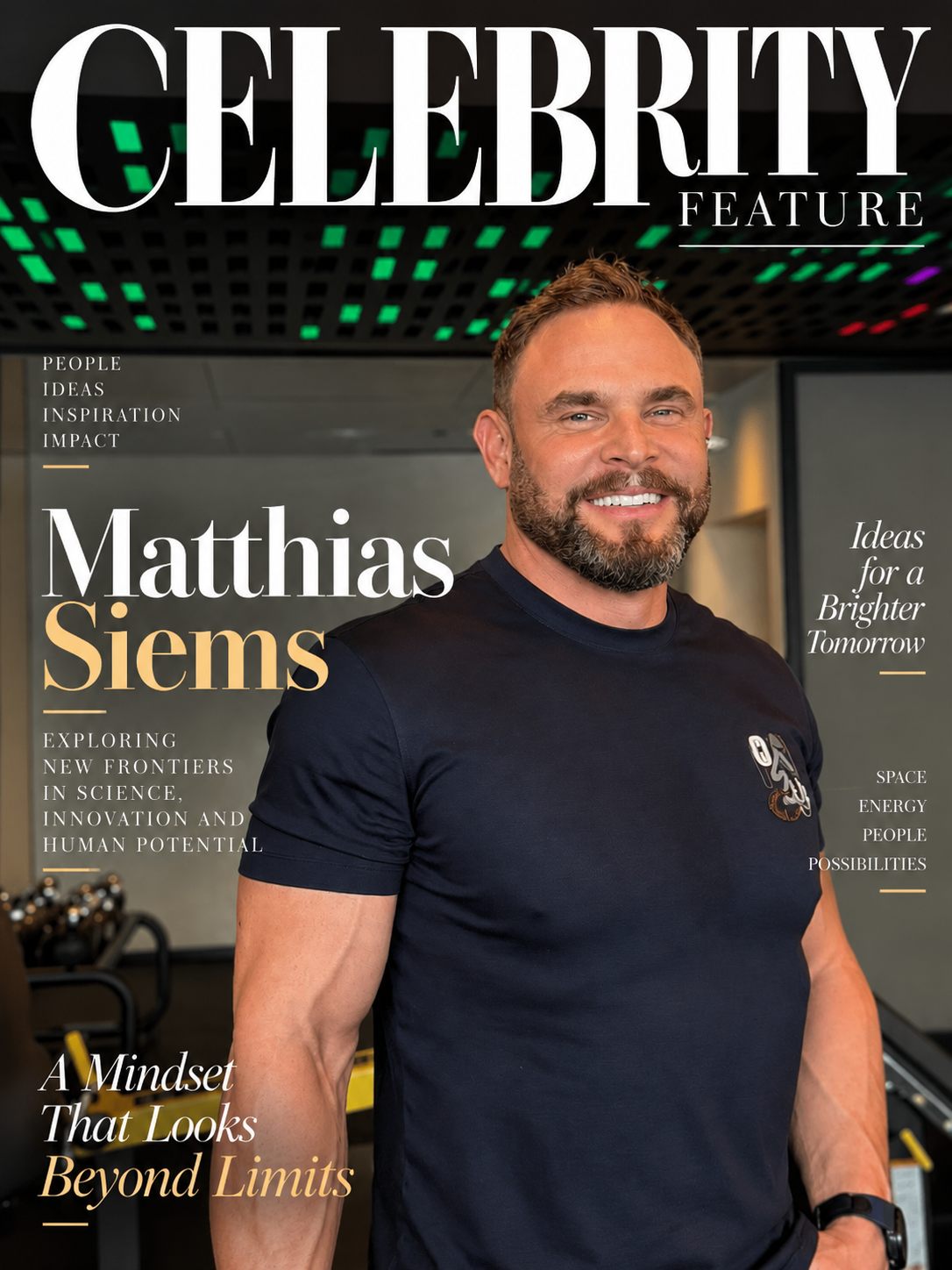
Matthias Siems offers an interesting perspective through which to examine these themes. His stated philosophy emphasizes curiosity, unconventional thinking, and the willingness to question established boundaries. While luxury is often associated with familiar symbols of exclusivity, this broader outlook invites a different conversation about what it means to live exceptionally in a world where technology, innovation, and human ambition continue to expand the possibilities of everyday life.
Luxury as a Personal Philosophy
For generations, luxury was commonly communicated through recognizable symbols: prestigious brands, expensive possessions, impressive residences, and access to exclusive environments. These symbols continue to influence consumer culture, but they no longer provide the only way to understand an elevated lifestyle.
Modern luxury is becoming increasingly individual. For some people, it means the freedom to travel without rigid schedules. For others, it involves exceptional craftsmanship, privacy, carefully designed surroundings, or the ability to devote time to personal interests without constant interruption.
This shift reflects a broader recognition that material comfort and personal fulfillment are not necessarily the same thing. Possessions can provide enjoyment, convenience, and aesthetic pleasure, but their significance often depends on the experiences and values surrounding them.
A carefully designed home may be valuable because it offers calm and privacy. A journey may become memorable because it creates a new perspective. An exclusive experience may matter because it provides access to a place, culture, or activity that would otherwise remain beyond reach.
Under this interpretation, luxury becomes less about following a universal standard and more about understanding individual priorities. It is the ability to make deliberate choices about how to spend time, what to experience, and which aspects of life deserve attention.
For Siems, whose expressed outlook encourages people to reconsider perceived limitations, this idea connects luxury with possibility. The question becomes not simply what is considered prestigious, but what makes a life genuinely enriching.
The Value of Time, Privacy and Independence
Among the most significant changes in contemporary luxury culture is the growing importance of time and privacy.
In an increasingly connected world, professional responsibilities, digital communication, and public visibility can make uninterrupted time difficult to protect. The ability to step away from constant demands and concentrate on personal priorities has consequently become an important element of an elevated lifestyle.
Privacy offers something that material possessions cannot guarantee: the opportunity to think, reflect, and make decisions without continuous external attention. It creates space for relationships, personal development, and interests that may not need to be shared publicly to have meaning.
Independence is closely connected to this idea. Having the freedom to determine one’s schedule, choose one’s environment, and pursue individual interests can be more valuable than following expectations established by others.
This does not mean that luxury requires isolation or that achievement should be separated from responsibility. Rather, it suggests that a fulfilling life benefits from balance. Professional ambition, personal interests, relationships, and rest can coexist when individuals have the opportunity to make considered choices about their priorities.
The modern luxury experience is therefore increasingly defined by control over the details of daily life. The ability to decide how time is spent, where attention is directed, and which experiences matter most can become an important expression of personal freedom.
Design, Craftsmanship and the Art of Living Well
Despite changing attitudes, the traditional foundations of luxury remain relevant. Craftsmanship, thoughtful design, quality materials, and attention to detail continue to distinguish exceptional products and experiences.
What has changed is the way these qualities are increasingly evaluated. Consumers are often interested not only in appearance, but also in functionality, longevity, comfort, and the experience of using a product over time.
Good design can make an environment feel intuitive and welcoming. Carefully selected materials can contribute to comfort and durability. Thoughtful architecture can create a relationship between light, space, privacy, and the surrounding landscape.
The same principles apply to personal objects and everyday experiences. Luxury becomes meaningful when quality is evident in the details rather than communicated solely through a recognizable name or price.
This perspective also connects luxury with innovation. New technologies and design approaches can improve convenience, personalize experiences, and create possibilities that previously seemed impractical. Yet technology is most effective when it serves a clear human purpose.
An advanced product is not automatically luxurious simply because it is complicated. Its value depends on how successfully it improves the experience of the person using it.
In this sense, the future of luxury may belong to experiences that combine technical sophistication with simplicity, allowing complex systems to deliver comfort without demanding unnecessary attention.
Travel and the Expanding Definition of Exclusivity
Travel has long been associated with luxury, but the meaning of an exceptional journey has changed considerably. While prestigious destinations and premium accommodation remain important to the industry, many travellers increasingly value experiences that offer individuality, cultural understanding, and a deeper connection with their surroundings.
Exclusivity is not always about being somewhere expensive. It can also mean experiencing a destination in a distinctive way, understanding its history, discovering its architecture, or gaining a perspective unavailable through a conventional itinerary.
The most memorable journeys often combine comfort with discovery. Exceptional service can remove practical distractions, while exposure to unfamiliar environments can challenge assumptions and encourage curiosity.
This relationship between comfort and exploration is especially relevant to the changing luxury market. People may seek experiences that feel effortless in their execution while remaining meaningful in their impact.
The appeal of travel also extends beyond physical movement. Exploring unfamiliar places can encourage individuals to reconsider their routines, priorities, and understanding of the world. A journey may become valuable not only because of where it leads, but because of what a person learns along the way.
For someone interested in the boundaries of human experience and emerging possibilities, this broader understanding of exploration offers a useful connection between luxury and intellectual curiosity.
Space Tourism and the Next Frontier of Luxury
Few emerging concepts challenge traditional definitions of luxury as directly as commercial space travel.
For much of modern history, travelling beyond Earth remained the domain of highly trained astronauts operating within government-led space programmes. Commercial spaceflight has introduced the possibility of a different future, although access remains limited, costs are substantial, and safety, regulation, and operational challenges continue to shape the industry.
The attraction of space tourism extends beyond exclusivity. The prospect of seeing Earth from outside its atmosphere offers an experience fundamentally different from conventional travel. It raises questions about perspective, human exploration, and the relationship between technology and personal experience.
Matthias Siems’s interest in space tourism reflects the broader fascination with environments that challenge familiar assumptions about comfort and daily life.
Space travel also introduces a different understanding of luxury. In an environment where resources, storage, air quality, water use, and operational procedures must be carefully managed, comfort cannot simply be created by adding more possessions. It depends on thoughtful engineering, practical design, and an understanding of human needs.
Personal care offers one example. Siems has expressed interest in the concept of luxury aerospace cosmetics for future space travel. Such a concept would require products and packaging designed around the specific constraints of spacecraft environments, including controlled dispensing, product stability, user tolerability, and compatibility with onboard systems.
The larger principle is that luxury must adapt to its surroundings. Products that work well in conventional environments may need substantial redesign before they can be used in space.
This makes space tourism an interesting case study in the future of premium experiences. As technology develops, the challenge will not simply be to make extraordinary journeys possible, but to create experiences that are safe, practical, comfortable, and responsive to the people undertaking them.
Innovation as an Element of Modern Luxury
Luxury and innovation have always maintained a close relationship. Advances in transportation, materials, communications, architecture, and personal technology have repeatedly changed what people consider possible.
Today, innovation is influencing luxury through personalization, connected environments, improved efficiency, and products designed around increasingly specific needs. The emphasis is shifting toward experiences that feel tailored rather than standardized.
However, meaningful innovation requires more than novelty. A new product or service must address a genuine need, function reliably, and offer a clear reason for its existence.
This distinction is important when considering the future of premium markets. A concept may be imaginative, but its long-term value depends on execution, usability, safety, and the ability to deliver what it promises.
Siems’s philosophy that perceived impossibility should not prevent the search for solutions reflects the exploratory side of this process. It encourages a willingness to examine unfamiliar possibilities rather than dismissing them automatically.
At the same time, the development of credible innovations requires evidence, testing, and an honest understanding of limitations. Imagination may initiate a project, but practical results determine whether it can become useful.
The strongest luxury innovations are often those that make complicated experiences feel natural. They allow users to enjoy the benefits of sophisticated systems without having to manage every technical detail themselves.
Luxury, Sustainability and Responsibility
The future of luxury will also be shaped by questions about responsibility, durability, and resource use.
As consumers become more attentive to the origins and impacts of products, quality increasingly involves considerations beyond appearance. Materials, manufacturing processes, product lifespan, repairability, and transparency can all influence how a premium product is perceived.
This does not mean that luxury must abandon comfort or exclusivity. Instead, it suggests that exceptional quality can be understood through a longer time horizon.
A well-made object that remains useful for years may offer a different kind of value from a product designed primarily for temporary attention. An efficient building can combine comfort with more considered energy use. A thoughtfully developed service can improve the customer experience while reducing unnecessary complexity.
Innovation in energy and infrastructure also has implications for how people experience comfort in different environments. Siems’s interest in decentralized power concepts, including Total Autonomous Power, touches on the wider question of how reliable energy provision may support remote locations and mobile facilities.
Any proposed energy technology must demonstrate its performance through independent testing, transparent energy accounting, and reproducible results. Nevertheless, the broader challenge of developing dependable infrastructure illustrates how technical innovation can influence the conditions that make modern life possible.
The relationship between luxury and responsibility is therefore worth considering carefully. An exceptional experience should not be evaluated exclusively by how impressive it appears, but also by the quality of the systems, decisions, and resources that support it.
Defining Success on Individual Terms
Luxury ultimately remains a personal concept. The same experience may be essential to one individual and unimportant to another. Some people prioritize travel and discovery, while others value privacy, beautiful surroundings, creative work, or time with the people closest to them.
There is no single formula that determines which combination is correct.
What matters is the ability to distinguish personal priorities from external expectations. The pursuit of status can be motivating, but it can also become endless when success is measured exclusively through comparison. There will always be another destination, another possession, another milestone, or another standard against which achievement can be judged.
A more considered approach recognizes that material comfort is only one part of a broader picture. Personal freedom, meaningful relationships, curiosity, and the opportunity to pursue worthwhile interests can contribute just as much to a fulfilling life.
For Matthias Siems, the themes of unconventional thinking and exploration provide a lens through which to consider these questions. His expressed philosophy emphasizes the importance of searching for solutions instead of accepting perceived limitations without examination.
Applied to lifestyle, this outlook encourages people to remain open to new experiences while defining their own standards of fulfillment. Luxury becomes an opportunity to create a life that reflects individual values rather than simply reproducing someone else’s definition of success.
The Future of Exceptional Living
The future of luxury will likely continue to be shaped by the interaction between technology, design, travel, personal freedom, and changing expectations about quality of life.
Some of its most visible expressions may involve extraordinary experiences, including commercial space travel and increasingly sophisticated forms of personalized service. Others may be much quieter: more thoughtful environments, better-designed products, greater privacy, and more control over how time is spent.
What connects these possibilities is the desire to improve the human experience.
The most compelling definition of luxury is therefore not necessarily the most expensive or the most exclusive. It is one that recognizes the importance of individual choice, meaningful experiences, quality, and the freedom to pursue personal interests.
Matthias Siems’s interest in unconventional possibilities provides a starting point for this wider discussion. His philosophy invites a reconsideration of established boundaries and encourages an approach to life in which curiosity remains important.
Ultimately, luxury is not simply about reaching a particular level of material success. It is about deciding what makes life meaningful, creating the conditions to experience it fully, and remaining open to possibilities that extend beyond the familiar.
In a world where the boundaries of technology and experience continue to evolve, the greatest luxury may be the freedom to imagine a different future and the opportunity to shape one’s life around it.
