
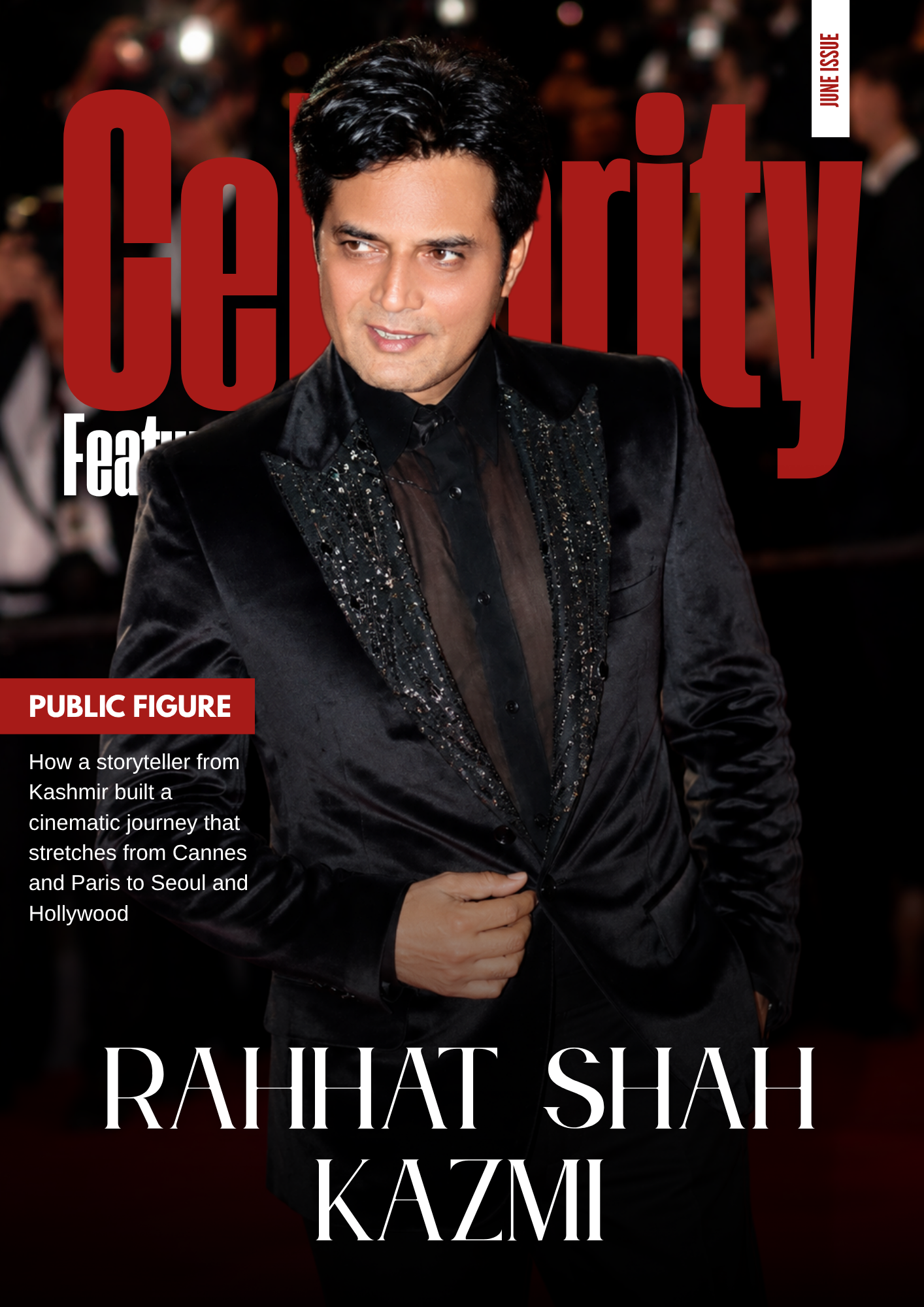

How a storyteller from Kashmir built a cinematic journey that stretches from Cannes and Paris to Seoul and Hollywood
Success in cinema often arrives through visibility.
For Rahhat Shah Kazmi, it arrived through persistence.
Long before his name began appearing at major international festivals and award ceremonies, Kazmi was quietly building a body of work defined by emotional depth, literary influence, and an unwavering commitment to meaningful storytelling. While much of the industry focused on commercial formulas and mainstream recognition, he chose a different path, one centered on human experiences, cultural narratives, and stories that could travel beyond borders.
Today, that journey has reached one of its most significant milestones.
With the international success of Bombay Stories, Rahhat Shah Kazmi finds himself at the center of growing global attention. The film’s sold out World Premiere at the Cannes Film Festival, followed by its Best Feature Film victory at the Paris Film Awards, has introduced his work to a wider audience and reinforced his reputation as one of India’s most internationally recognized independent filmmakers.
For many observers, however, this moment is not a surprise.
It is the result of years of dedication, creative courage, and a belief that powerful stories will always find their audience.
A Career Built Outside the Mainstream

Every few years, a filmmaker emerges from outside traditional industry structures and earns international recognition through the strength of their work alone.
Rahhat Shah Kazmi belongs to that rare group.
Born in Jammu and Kashmir, he developed a fascination with stories from an early age. The region’s rich cultural heritage, layered history, and diverse human experiences would later influence much of his creative outlook.
Rather than following a conventional path into filmmaking, Kazmi gradually built his career through independent projects that reflected his unique perspective on life, relationships, and society.
His films have consistently explored themes of identity, resilience, memory, belonging, and emotional survival. They are often rooted in literature and inspired by real human experiences, giving them a depth that resonates with audiences far beyond India.
Over time, this distinctive approach began attracting attention on the international festival circuit.
The Making of an International Voice
What separates Kazmi from many of his contemporaries is his ability to create films that feel both artistically rich and emotionally accessible.
While some filmmakers focus exclusively on commercial entertainment and others create work designed primarily for festival audiences, Kazmi has successfully navigated a space between the two.
His films are thoughtful without being inaccessible.
They are literary without feeling distant.
And they remain deeply human at their core.
This balance has allowed his work to connect with diverse audiences around the world.
Projects such as Mantostaan, inspired by the writings of Saadat Hasan Manto, and Lihaaf, based on the celebrated work of Ismat Chughtai, established him as a filmmaker with a deep appreciation for literature and cultural storytelling.
Both films earned critical acclaim and strengthened his reputation within international cinema circles.
His later works, including Lines, Wishlist, Last Coffee, and Am I Next, further demonstrated his versatility while maintaining his commitment to emotionally driven narratives.
Recognition Beyond Borders
As his filmography expanded, so did his international profile.
One of the most significant moments in his career came with Country of Blind, a project that attracted worldwide attention and achieved a rare distinction when its screenplay was acquired by the Academy Library in Los Angeles.
For an independent filmmaker, having work preserved within one of cinema’s most respected institutions is an extraordinary honor.
It also signaled that Kazmi’s storytelling was reaching audiences far beyond traditional festival circuits.
His global ambitions continued through Love in Vietnam, a landmark international collaboration that became one of the most successful creative partnerships between India and Vietnam.
The film earned widespread acclaim and secured major recognition at international award ceremonies. Kazmi was honored with the Best Director of Asia award at the Seoul Global Movie Awards, while the film itself received recognition as one of the region’s standout cinematic achievements.
By this point, it had become clear that Rahhat Shah Kazmi was no longer simply an independent Indian filmmaker.
He had become a truly international creative voice.
The Arrival of Bombay Stories
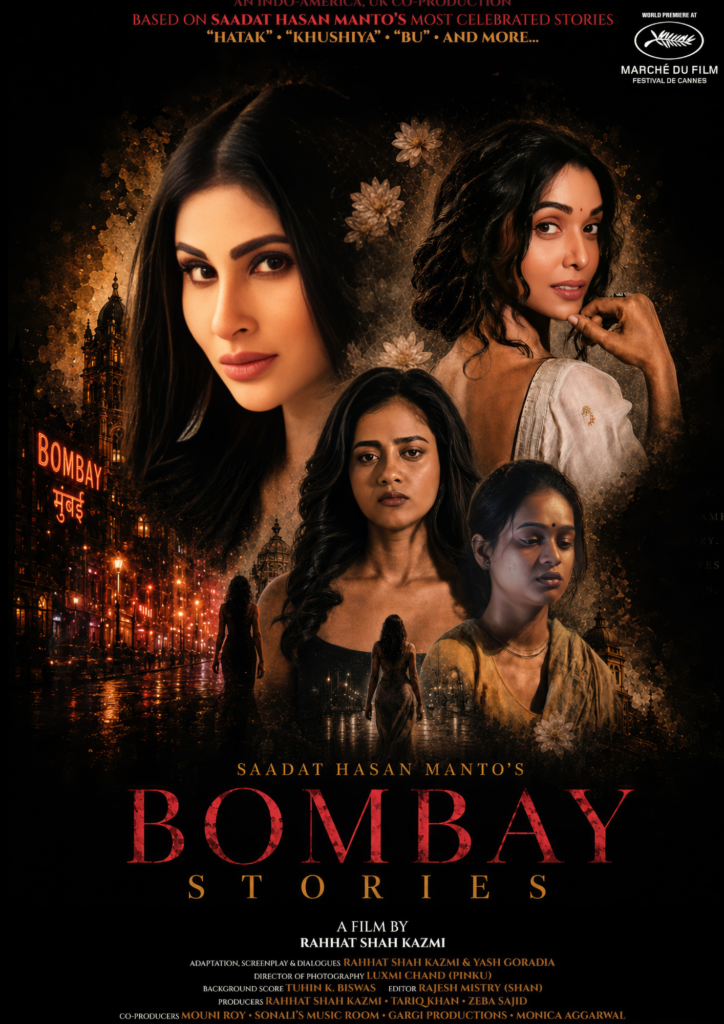
If previous films expanded his reputation, Bombay Stories elevated it to an entirely new level.
Inspired by the timeless writings of literary legend Saadat Hasan Manto, the film explores loneliness, desire, identity, dignity, and survival through interconnected narratives set against the backdrop of contemporary Mumbai.
Rather than adapting a single story, Kazmi draws inspiration from Manto’s worldview and literary themes, creating a modern narrative that feels both relevant and timeless.
The film stars Mouni Roy, Anupriya Goenka, and Sushmita Singh, whose performances bring emotional depth and authenticity to the story.
At its heart, Bombay Stories is a film about people.
It examines lives that often remain unseen and voices that are frequently overlooked. Through its characters, the film explores universal emotions that connect audiences regardless of language, culture, or geography.
It is precisely this emotional honesty that has helped the film resonate so strongly on the international stage.
A Triumph at Cannes and Paris
The Cannes Film Festival has long been considered one of the most prestigious platforms in world cinema.
For independent filmmakers, premiering a film there is a major accomplishment.
For Bombay Stories, the experience became even more memorable.
The film’s World Premiere attracted a packed audience, with delegates and festival attendees gathering well before the screening began. As the story unfolded, viewers responded with remarkable engagement, creating one of the most talked about screenings involving an Indian independent production at the festival.
The positive response generated significant discussion among international critics, distributors, and festival delegates.
Many praised the film’s literary richness, emotional depth, and powerful performances.
The momentum continued when Bombay Stories went on to win Best Feature Film at the Paris Film Awards.
The recognition transformed an already successful festival journey into a defining moment for the film and its creators.
More importantly, it confirmed what many audiences had already felt at Cannes.
The film had connected with people on a deeply human level.
A Powerful Ambassador for Indian Independent Cinema

The success of Bombay Stories arrives at an important moment for global cinema.
Audiences around the world are increasingly seeking fresh perspectives, authentic voices, and stories that offer genuine emotional experiences.
Rahhat Shah Kazmi’s work speaks directly to that demand.
His films are rooted in Indian culture yet possess a universality that allows them to travel effortlessly across borders.
They remind viewers that great storytelling is not defined by scale or spectacle but by emotional truth.
In many ways, Kazmi has become one of the strongest ambassadors for contemporary Indian independent cinema on the global stage.
Through his films, he has demonstrated that stories emerging from local realities can resonate with audiences worldwide when told with honesty and conviction.
The Story Continues
Today, as Rahhat Kazmi Film Studios expands its international presence through new productions and global collaborations, Rahhat Shah Kazmi stands at a unique point in his career.
He is a filmmaker whose work has been recognized in Cannes, celebrated in Paris, honored in Seoul, and preserved in Hollywood.
Yet despite the growing acclaim, his creative philosophy remains unchanged.
He continues to believe in the power of stories.
He continues to champion literature, culture, and human emotions.
And he continues to create films that remind audiences why storytelling matters.
With Bombay Stories capturing international attention and introducing his work to an even larger audience, one thing has become increasingly clear.
The world may have discovered Rahhat Shah Kazmi before mainstream India fully did.
But now, it is impossible to ignore the impact of a filmmaker whose stories continue to travel across continents and touch hearts everywhere they go.